


Back
Stages and Symptoms of Drug Addiction: A Guide for Indians
17 Min Read
Table of contents
- Let's Talk About Drug Addiction
- Definition of Drug Dependence and Scope: What Is Drug Addiction?
- Symptoms of Drug Addiction Experienced by Individuals
- Common Causes of Drug Addiction
- The Various Stages of Drug Addiction
- Impact on Life and Relationships
- The Different Types of Drug Addiction
- Diagnosis: How Is Drug Addiction Identified According to DSM-5?
- Comorbidity in Addiction: Anxiety, Trauma, and Substance Use
- Effective Treatment Options for Drug Abuse in India
- Taking the First Step
- How Friends and Family Can Help
- Finding Professional Help
- Aftercare: Why Follow-Up Matters
- Care for Caregivers: Staying Strong While Supporting Recovery
- Preventive Strategies
- Am I at Risk?
- Hope Is Always Around
- FAQs About Stages and Symptoms of Drug Addiction
- Bibliography
Table of contents
Let's Talk About Drug Addiction
Drug addiction affects people across India, from metro cities to small rural towns, often beginning quietly and growing through repeated use, stress, and changes in the body. Being aware of the stages of drug addiction helps families notice early shifts before the situation becomes severe. Pressure comes from many places: demanding jobs in Bengaluru’s tech corridors, intense academic environments in Kota, and financial strain in rural areas. What begins as casual use or relief from stress can slowly turn into dependency. Since many people speak up only when things get serious, spotting the early symptoms of drug addiction becomes crucial. Early recognition makes it easier to seek help, protect health, and begin recovery with greater confidence and support. As a result, the earliest symptoms of drug addiction are often overlooked. This guide aims to offer clarity where confusion is common. We’ll look at: What is drug addiction? The earliest symptoms of drug addiction? The stages of drug addiction as it develops? The physical and emotional effects of drug addiction? The importance of early recognition and timely help? A national survey by AIIMS and the Ministry of Social Justice and Empowerment (MSJE) found that 16 crore people drink alcohol, 3.1 crore use cannabis, and 2.26 crore use opioids. Many people also use sedatives and inhalants. More than 5.7 crore people need help for alcohol problems, around 25 lakh are dependent on cannabis, and nearly 77 lakh need treatment for opioid use. These numbers show that substance use is common and that many people need timely support. Let's understand Drug Addiction with this true-to-life story: Rajesh, 38, a software engineer from Hyderabad, had a normal life. Slowly, things started to change. He stayed late at work and blamed extra assignments. He looked tired, got irritated easily, and small things upset him. These were early symptoms of drug addiction, though no one noticed at first. During office breaks, he smoked to feel relaxed. Later, he tried stronger highs at the paan shop to escape stress for a few minutes. Over time, he went through the early stages of drug addiction, even though he thought he was in control. His hands shook during festivals, he forgot client calls, his work suffered, money went missing, and he spent less time with family. His wife finally asked him to see a counsellor. A checkup showed he was in the early phase of drug addiction, and his brain had started depending on substances to feel normal. With counselling, medicine to manage drug withdrawal, and family support, trust at home returned. Rajesh and his family learned that noticing early symptoms of drug addiction and seeking help makes recovery possible and life better again.
Definition of Drug Dependence and Scope: What Is Drug Addiction?
Drug addiction, called Substance Use Disorder in the DSM-5, is a long-term medical condition. It means a person finds it hard to control drug use, even when it causes harm to health, work, or family life. Over time, repeated drug use changes how the brain works. This affects judgment, self-control, and decision-making. Drug addiction can involve legal substances like alcohol and tobacco, prescription medicines taken without medical advice, or illegal drugs such as heroin, methamphetamine, and synthetic pills. In many Indian cities, synthetic drugs are becoming more common because they are cheaper and easier to hide. Drug addiction does not affect only one person. It also harms families and communities. It can lead to stress, broken trust, emotional pain, and risky behaviour. Early awareness of drug dependence and timely medical support can make recovery easier.
Symptoms of Drug Addiction Experienced by Individuals
The early symptoms of drug addiction rarely show up dramatically. They tend to creep in slowly, showing up as small behavioural changes or mood swings that people around them cannot easily explain. Over time, these become clearer drug dependence symptoms. The impact of substances on the brain can weaken memory and focus, making simple tasks feel confusing. These symptoms involve: Craving: Experiencing a strong, compulsive urge to use the substance. Preoccupation: Devoting significant mental energy to thinking about the substance. Poor Judgment: Making impaired decisions related to substance use. Denial: Minimising the harm caused or continuing use despite knowing the negative consequences. Loss of Control:Finding it difficult to manage the amount or frequency of use. This is where friends and family usually sense that something feels "off". Common changes include: Usage Patterns: Using larger amounts or for longer periods than originally intended. Failed Attempts: Repeatedly trying to cut down or quit without success. Time Commitment: Spending excessive time obtaining the substance, using it, or recovering from its effects. Neglect of Responsibilities: Skipping classes, work, or home obligations. Social Withdrawal: Giving up recreational activities or social gatherings to use the substance instead. Risk-Taking: Engaging in impulsive or dangerous behaviours while intoxicated. Coping Mechanism: Using the substance specifically to relieve emotional distress or physical withdrawal. Relationships often weaken as a compulsive pattern of use grows. Relationship Breakdowns: Frequent conflicts with family, friends, or colleagues. Reduced Participation: Withdrawing from family roles or cultural practices that once brought joy. Academic or Occupational Decline: Falling grades or poor work performance. Legal Issues: While not a direct DSM criterion, legal problems are often associated with substance-seeking behaviours. In environments where medical care is limited, physical symptoms may escalate quickly. Tolerance: Needing larger amounts of the substance to achieve the same effect. Withdrawal: Experiencing physical distress when reducing or stopping use. Physical Indicators: Bloodshot eyes, tremors, poor hygiene, or neglected self-care. Health Changes: Significant sleep disturbances and rapid, unexplained weight or appetite changes. Exacerbation of Illness: Continued use even when a medical or psychological problem (like anxiety or depression) is worsened by the substance. A key indicator of the disorder is the persistence of use despite physical danger or medical advice. Dangerous Situations: Using substances while driving or operating machinery. Compulsive Patterns: A cycle of use that remains persistent even after detoxification. Cue-Induced Craving: Environmental triggers—such as visiting certain places or meeting specific groups—that spark an intense urge to use. Relapse: Returning to use after a period of abstinence. Sukoon Suggests: Notice small behaviour changes early and begin gentle conversations to understand what is happening. Seek guidance from an expert before things get tough.Cognitive and Psychological Symptoms
Behavioural Symptoms
Social and Interpersonal Symptoms
Physical and Physiological Symptoms
Risky Use and Neurobiological Features
Common Causes of Drug Addiction
There isn't a single reason. Most cases arise from a mix of: Genetics Stressful environments Social pressure Early exposure to substances Mental health struggles Traumatic experiences In India, cultural habits also play a part. Alcohol is seen as normal at weddings; smoking bidis in villages begins casually; hostel life exposes many young people to experiments; and economic hardships push people toward escapism. Children growing up in homes where one parent drinks heavily are more likely to develop similar patterns. Students overwhelmed by competitive exams or job uncertainty often seek relief in substances. Easy access, from street vendors to smuggling networks, only increases risk.
The Various Stages of Drug Addiction
Addiction often moves through predictable stages that help explain the impact of drugs on the brain and behaviour: This initial stage is often driven by external social factors or internal emotional states. Curiosity about a substance's effects, the desire to fit in due to peer pressure, or an attempt to manage temporary stress can lead to occasional use. During experimentation, the individual typically perceives the substance as a choice or a "one-off" experience, often failing to recognise how subtle cues in their environment might already be priming them for future use. In this stage, the pattern of use shifts from situational to habitual. The person begins using the substance on a weekly or even daily basis, frequently utilising it as a primary tool to cope with daily life or emotional pain. While they may still fulfil their main responsibilities, the substance becomes a predictable part of their routine. This regularity can create cognitive dissonance, where the individual begins to rationalise their frequent use to resolve the mental tension between their actions and their values. At this point, the psychological impact of the substance leads to visible deviations from rational decision-making. Harmful and risky behaviors begin to emerge, such as operating machinery or driving while intoxicated. The individual may experience frequent social conflicts, legal issues, or significant financial trouble as they continue to use the substance despite knowing the negative consequences. Their judgment becomes increasingly clouded by confirmation bias, as they tend to ignore the mounting evidence of harm and only focus on the temporary relief the substance provides. Dependence is marked by physical and neurobiological changes in the brain. Tolerance develops during this stage, which means the body's physiological systems have adapted to the substance, requiring higher doses to achieve the same effect that smaller amounts once provided. The individual often experiences "decision fatigue," where the mental effort required to manage their use and its consequences exhausts their ability to commit to stopping. At this stage, the substance is no longer used for "pleasure" but rather to maintain a sense of physical normalcy. In the final stage, compulsive use dominates almost every aspect of an individual's life. Cravings become intense and persistent, often triggered by environmental cues that the brain has been primed to associate with use. Drug withdrawal effects, including sweating, vomiting, tremors, and severe anxiety, appear when the person attempts to stop. This creates a cycle of use where the individual continues the behaviour primarily to avoid physical and mental distress. While the Dunning-Kruger effect might lead some to overestimate their ability to quit on their own, true recovery often requires structural support and professional guidance. Relapses are a common part of this complex journey, but every recovery attempt provides an opportunity to build resilience and self-awareness.Stage 1: Experimentation
Stage 2: Regular Use
Stage 3: Risky Use
Stage 4: Dependence
Stage 5: Addiction
Impact on Life and Relationships
The effects of drug addiction slowly change how a person lives each day. Mornings may begin with nausea or cravings, afternoons become unproductive, and evenings revolve around getting the next dose. Bills pile up. Work performance drops. School attendance becomes irregular. In families, frustration grows. Sometimes parents may resort to blame when they feel overwhelmed and lack the necessary tools to provide the support their child needs. Spouses may feel abandoned. Elderly parents are left confused and distressed. Communities also feel the weight: Crimes rise Hospital cases increase Children face emotional instability Yet recovery remains possible. With the right support, broken relationships can be rebuilt, and individuals can restore daily routines. Sukoon Suggests: Use a simple notebook to track mood shifts, spending patterns and daily habits over time. Start the journey toward recovery today.
The Different Types of Drug Addiction
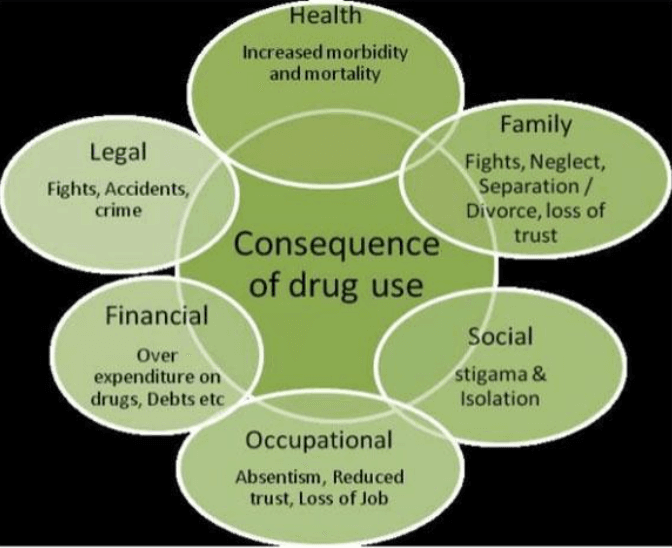
Drug addiction can affect anyone, regardless of age or background. It often starts gradually and worsens over time if not addressed. Drug addiction affects people differently depending on the substance they use. Common types include: Alcohol Caffeine Cannabis Hallucinogens Inhalants Opioids Sedatives, Hypnotics, or Anxiolytics Stimulants Tobacco Other or Unknown Substances The shared characteristics of drug addiction include compulsion, tolerance, cravings, relapse cycles, and the inability to stop despite consequences. All forms of addiction share certain characteristics. These include a strong compulsion to use, growing tolerance, persistent cravings, cycles of relapse, and the inability to stop even when facing negative consequences. Understanding these types helps in recognising addiction early and seeking the right treatment. This visual highlights the effects of substance abuse on health, family relationships, finances, work life, and legal safety. In India, drug use does not affect one area alone; it spreads into every part of life. Sukoon uses such awareness tools to encourage early action and prevention
Diagnosis: How Is Drug Addiction Identified According to DSM-5?
The DSM-5 classifies drug addiction as Substance Use Disorder, which is diagnosed based on specific behavioural, physical, and psychological signs. The severity of the disorder is determined by the number of DSM-5 criteria met by the individual. A mild diagnosis involves 2 to 3 symptoms, A moderate diagnosis involves 4 to 5 symptoms, and A severe diagnosis is identified when 6 or more symptoms are present. Because the course of the disorder can change over time, clinicians assess these specifiers using a combination of self-reports, informant reports from family, direct clinical observation, and biological tests. To identify drug dependence, professionals look for a combination of drug dependence symptoms over 12 months. These include: Using more of the drug or for longer than intended Persistent cravings or strong urges to use Inability to cut down or control usage Tolerance, needing higher amounts to achieve the same effect Withdrawal symptoms such as sweating, nausea, shaking, or anxiety when stopping Continuing use despite health, social, or work problems Giving up important activities because of drug use In India, diagnosis usually begins with detailed interviews with the individual and family members, physical examinations, and lab tests. Community health workers often help spot early symptoms of drug dependence and connect families to specialised clinics. Accurate diagnosis using DSM-5 guidelines allows doctors to create personalised treatment plans for drug abuse. Early identification increases the chances of successful recovery and prevents long-term physical, mental, and social consequences. Proper evaluation also helps families understand the condition and provide informed, supportive care. A QUIET MOMENT OF SUKOON Let this information settle. Take a short break and come back when your thoughts feel steady.
Comorbidity in Addiction: Anxiety, Trauma, and Substance Use
When battling drug addiction, it's quite common for other mental health challenges to surface alongside it. This overlap, known as comorbidity, often makes recovery more complicated. Substances may become a form of self-medication for emotional discomfort, creating a cycle where each condition reinforces the other. The impact of drugs on the brain can intensify anxiety or mood disorders, while untreated mental health issues increase the risk of relapse. Globally, about 40% of people with substance use disorders also experience anxiety, and India shows similar trends, with studies reporting rates from 18% to over 40%. Trauma can lead to PTSD that blends with drug habits, and stimulants like methamphetamine may trigger episodes of psychosis. Other conditions are also commonly seen alongside substance dependence. Mood disorders such as depression or bipolar disorder may heighten emotional instability and increase impulsive decisions around substance use. Anxiety disorders, including panic disorder or social anxiety, can lead individuals to rely on substances to feel calm or confident. Personality disorders, particularly those involving emotional dysregulation or unstable relationships, may make it harder to maintain long-term recovery without structured support. In the Indian context, untreated depression plays a major role, contributing to nearly 30% of relapses after treatment. The emotional gaps left unaddressed often pull individuals back toward substances, offering short-lived comfort but deepening the struggle over time. This image shows cigarettes, pills, and alcohol, representing common usage of drugs seen in everyday settings. Regular or combined use increases the risk of dependence and health damage. Sukoon educates families about recognising harmful patterns early and seeking timely treatment.

Effective Treatment Options for Drug Abuse in India
Getting the right help is the first step in recovery from drug abuse. Knowing about drug withdrawal and its effects can make treatment safer and more effective. In India, treatment for drug abuse depends on the type of substance, how severe the problem is, and the individual's needs. Effective programs usually combine: Detoxification to manage drug withdrawal safely Counselling and therapy sessions Support groups such as Narcotics Anonymous or local community programs Skill-building and vocational training Medication when needed Lifestyle changes to support recovery In India, holistic methods like yoga, meditation, mindfulness, good nutrition, and family therapy are often used. Early help is important because it can prevent severe dependence and lessen drug withdrawal effects. Combining medical care with family and cultural support improves the chances of lasting recovery.
Taking the First Step
Spotting the signs of drug use early is very important. Acting fast can stop the problem from getting worse. Seeing these early signs is the first step toward recovery. Even small steps can help a lot. A person can: Speak to a trusted doctor Join support groups for guidance Track cravings and usage patterns Identify triggers that lead to drug use Seek mental health counselling Build daily routines that reduce idle time Even small steps, like staying away from old hangouts, can help. Being consistent and asking for support makes recovery stronger. Taking the first step today improves the chance of beating drug dependence and gaining control over life. Sukoon Suggests: Reduce triggers by limiting stressful environments and encouraging open conversations at home or school. Take the first step toward support.
How Friends and Family Can Help
In India, families are often the main support system for people struggling with drug dependence. Their role in recovery is very important. Families can: Speak without judgment to create a safe space Learn the symptoms of drug dependence to recognise early warning signs Stay involved in therapy sessions and treatment plans Encourage healthy routines like regular meals, exercise, and structured daily activities Celebrate improvements, however small, to motivate continued progress Setting boundaries is very important. Support should not turn into helping the person continue drug use. For example, giving money or hiding their drug use can make recovery harder. Clear and caring limits keep both the person and the family safe while still offering help.
Finding Professional Help
Getting help for drug dependence is an important step toward recovery. Many people in India hesitate to ask for help because of shame or fear of gossip. But several options are available: Government schemes offering subsidised counselling and treatment Online therapy platforms for remote support Local hospitals with addiction wards NGOs providing community-based support Specialised institutes in major cities A good therapist listens carefully, understands the person's background, and gives practical advice that fits daily life. Seeking professional help early makes recovery easier and reduces the chance of long-term problems.
Aftercare: Why Follow-Up Matters
Recovery does not end when the main treatment finishes. Aftercare helps maintain progress and prevents relapse. It may include: Regular counselling sessions Healthy lifestyle choices like exercise and nutrition Engaging in creative hobbies or skill-building Participation in peer support groups Monitoring early warning signs of relapse This phase helps the person keep moving forward, learn important life skills again, and stay connected with friends and family. It lowers the chances of going back to old habits. Aftercare makes recovery stronger, longer-lasting, and supported by both family and professionals.
Care for Caregivers: Staying Strong While Supporting Recovery
Caring for someone with drug dependence can be emotionally and physically exhausting. In India, caregivers often put their own needs last because of family duty and social pressure. Taking care of yourself is not selfish. It helps you stay strong and support your loved one better. Here are 7 practical tips for caregivers: Acknowledge your feelings It is normal to feel tired, angry, scared, or confused. Writing these feelings down or talking to someone you trust can bring relief. Set clear boundaries Decide what you can and cannot do. Supporting treatment is helpful, but enabling drug use is not. Learn about addiction Understanding drug dependence reduces blame and fear. Knowledge helps you respond with patience and clarity. Seek your own support Join caregiver support groups, speak to a counsellor, or use helplines when needed. Maintain daily routines Regular meals, rest, and small breaks protect your health and emotional balance. Avoid isolation Stay connected with trusted people. Sharing your burden lightens it. Celebrate small progress Even small steps forward matter. They keep hope alive. You are not weak for feeling tired. Caring for yourself strengthens your ability to care for others. Recovery is a shared journey, and your well-being matters too.
Preventive Strategies
Preventing drug addiction starts with awareness and early action. Prevention is key to reducing long-term harm from drug use. Schools, colleges, and communities in India can help by: Teaching about the stages of drug addiction Raising mental health awareness Providing safe recreational spaces for sports, hobbies, and social activities Reducing stigma around asking for help Regulating access to harmful substances Combining education, safe environments, and awareness helps protect individuals and build stronger, healthier communities. Early prevention also empowers families and youth to make safer choices and reduces the chances of drug dependence developing later. Sukoon Suggests: Create a weekly routine with supportive activities like yoga, journaling or group meetings for stability. If you're unsure where to begin, we can guide you.
Am I at Risk?
Risk of drug dependence increases if there is a family history of addiction, past trauma, easy access to substances, or untreated mental health problems. Being aware of personal vulnerabilities and noticing early symptoms of drug dependence can help people act before the problem worsens. Building coping skills, staying socially connected, and seeking professional help also reduce the risk. Avoiding triggers, such as stressful environments or peer pressure, is important. Social isolation can increase the risk, so maintaining friendships and community support helps. Healthy daily routines, practising stress management, and taking part in educational or recreational activities further protect against drug dependence. Early action and supportive habits strengthen resilience, making it easier to prevent addiction and maintain long-term well-being.
Hope Is Always Around
As people move through the stages of drug addiction, early curiosity can gradually turn into dependency. The symptoms of drug addiction often begin with small changes in mood, sleep, or daily habits and can develop into serious physical and emotional strain. Recognising these signs early in families, schools, and workplaces in India allows timely intervention before the problem worsens. Effective treatment for drug abuse combines medical care, therapy, and supportive routines. Sukoon offers supervised detox, counselling, and holistic practices such as yoga and art therapy in a calm, private environment. Round-the-clock care ensures withdrawal is safe and dignified. Fighting addiction in India also requires awareness, better policies, and accessible care. With early recognition, proper treatment, and social support, recovery becomes possible, and lives can be rebuilt with hope and resilience.
FAQs About Stages and Symptoms of Drug Addiction
Drug addiction can start slowly, sometimes from curiosity or stress, and sometimes from repeated usage of drugs for relief. When a person keeps taking a substance, the body and mind begin to depend on it. Over time, this leads to changes that match the drug dependence definition, where stopping becomes difficult. Family history, peer pressure, and emotional struggles can also increase the chances. Many people do not realise how early habits turn into long-term dependence. Understanding these early causes helps in preventing addiction before it becomes severe. Drugs change the brain’s messaging system, making it release more pleasure chemicals than usual. With time, these changes alter thinking, mood, and memory, showing the impact of drugs on the brain clearly. The brain starts craving the substance again and again. This cycle leads to stronger urges and difficulty controlling behaviour. These changes are part of the clinical manifestations of substance abuse, which show how deeply the brain is affected. Knowing this helps people understand why addiction is not simply a "choice." Drug addiction grows from repeated use, stress, emotional pain, or the wish to escape problems. With time, the body starts showing drug dependence symptoms, and stopping becomes harder. For some, trauma or difficult home situations make substances feel like a quick solution. Many people are unaware of the slow shift from casual use to dependence. As this continues, the characteristics of drug addiction begin to appear, such as cravings and loss of control. Early support can stop this from becoming severe. People struggling with addiction may act differently than before. They might hide their habit, avoid family, or show signs of risky behaviour. Many also experience mood swings, anger, or sudden changes in routine. These actions happen because their brain focuses mainly on getting the substance. Sometimes, the person may not even realise how their behaviour has changed. These patterns are often part of the symptoms of drug addiction, which friends and family may notice first. Drug addiction can appear in many ways, and it's not always obvious. A person may lose interest in work, studies, or relationships. Physical signs like tiredness, poor hygiene, or cravings may show symptoms of drug dependence. Emotional signs include stress, irritation, and difficulty managing feelings. Over time, the effects of drug addiction become clearer as health and daily life start to suffer. Seeing these signs early can help in seeking timely support. Using substances in harmful ways can impact health, mood, and decision-making. Long-term use leads to strong cravings and the effects of substance abuse on the body. People may also face trouble at work, in relationships, or with finances. The mind becomes less stable, and decisions may feel harder to control. These are often seen as part of the clinical manifestations of substance abuse, which show up both physically and emotionally. Getting help early prevents long-term damage. Helping someone begins with patience, kindness, and understanding. Encourage them to speak openly about their struggles. A doctor or counsellor can check for drug withdrawal effects or other concerns. Support can also include guiding them to rehab or therapy for proper treatment for drug abuse. Avoid blaming or judging, as it may push them away. Recovery is easier when family and friends stay involved. Testing for addiction usually includes medical interviews, physical exams, and sometimes lab tests. A doctor checks for symptoms of drug addiction such as cravings or mood changes. They may also ask about daily habits, stress, or health issues. Some tests look for substances in the blood, urine, or hair. These results, along with behaviour patterns, help confirm the stages of drug addiction. Testing early helps start treatment sooner. Rehab can be very helpful because it provides structure, counselling, and medical support. Many people recover well when they stay committed to the process. Rehab teams help manage drug withdrawal, cravings, and emotional challenges. With time, the person learns healthier habits and better coping skills. These improvements help reduce the effects of drug addiction and build long-term stability. Success depends on support, patience, and continued follow-up care. Read more: Understanding Drug and Alcohol Addiction Among IndiansWhat causes drug addiction?
How do drugs affect the brain?
What leads to drug addiction?
What are the behaviours of drug addicts?
What does drug addiction look like?
What are the effects of abnormal use of drugs?
How to help someone with a drug addiction?
How to test drug addiction?
Does rehab work for drug addicts?
Bibliography
National Drug Dependence Treatment Centre (NDDTC), Magnitude of Substance Use in India, website, NDDTC, 2019 Indian Journal of Psychiatry, Substance use and addiction: An Indian perspective, book, Wolters Kluwer India Pvt Ltd, 2005 Majumder, P., The Stain of Addiction: Substance Abuse in India: Policies, Programmes, and Perspectives, book, Sage Publications India, 2020 Smith, J. Peer Influence on Substance Use: A Comprehensive Review. Journal of Adolescent Health. Johnson, L. Exploring the Relationship Between Trauma History and Substance Abuse: A Meta-analysis. Addiction Research & Theory. Brown, R. The Role of Access to Substances in Adolescent Substance Experimentation: A Longitudinal Study. Substance Abuse. National Institute on Drug Abuse (NIDA). Understanding the Link Between Peer Influence, Trauma History, and Substance Experimentation in Adolescents. Centers for Disease Control and Prevention (CDC). (Year). Substance Use and Associated Factors Among Adolescents: A Comprehensive Review. Morbidity and Mortality Weekly Report (MMWR). Substance Abuse and Mental Health Services Administration (SAMHSA). Addressing Peer Influence, Trauma History, and Access to Substances in Adolescent Substance Use Prevention Programs. Technical Assistance Publication (TAP). National Institute on Drug Abuse (NIDA). (2020). Understanding Drug Use and Addiction. Retrieved from https://www.drugabuse.gov/publications/drugfacts/understanding-drug-use-addiction Substance Abuse and Mental Health Services Administration (SAMHSA). (2019). Behavioral Health Trends in the United States: Results from the 2018 National Survey on Drug Use and Health. Retrieved from https://www.samhsa.gov/data/report/behavioral-health-trends-united-states-results-2018-national-survey-drug-use-and-health World Health Organization (WHO). (2018). Management of Substance Abuse: Factsheet. Retrieved from https://www.who.int/news-room/fact-sheets/detail/substance-abuse Indian Journal of Psychiatry. (2016). Substance Use Disorder: An Overview. Retrieved from https://www.ncbi.nlm.nih.gov/pmc/articles/PMC5224788/ National Institute of Mental Health and Neurosciences (NIMHANS). (2019). Substance Use Disorder: A Guide for Families. Retrieved from https://nimhans.ac.in/wp-content/uploads/2019/07/SUD-Guide-English-21-June-2019-1.pdf





+91 8448156500

+91 1244265238


admissions@sukoonhealth.com

Menu